Monday, December 8, 2014

Criminalization of Pregnant Substance Abusers


Andrea Smith’s cogent argument in her article “Better Dead Than Pregnant” enlightens us to the multitude of ways Native women are blatantly discriminated against when it comes to their reproductive rights and health care.  She specifically focuses on the faults of the Indian Health Service (IHS). While there are numerous topics within her article that deserve more attention, an area of particular interest for me was when she discussed the criminalization of pregnant substance abusers.  In this blog, I plan to analyze this idea through the framework that even though the system of health care that Native women rely on claims to be preventative, it is really a system based on punishment. 

The health care system Native women have to deal with is much different than the health care many upper and middle class white women are used to.  While many people might be used to having a choice as to which doctors they see and the ability to seek a second opinion, these are not luxuries that Native women who rely on IHS have access to.  Legislation on reproductive rights doesn’t just neglect Native women, it intentionally targets them.  Andrea Smith gives the gruesome example of Inuit women who were not offered anesthesia during their abortions.  Smith informs us that this was a punitive measure meant to deter the women from becoming pregnant again.  She writes, “By increasing the pain and trauma associated with abortion, or by making it inaccessible, the health care establishment exerts even more pressure on Native women to agree to sterilizations or dangerous contraceptives” (98).  I think it’s important that we see this action for what it really is: a punishment for being a Native pregnant woman.  The fact that there is such a vehement reluctance for Native babies to be born proves that they are not wanted or valued by our dominant white culture.  The severe punishments that Smith names, especially including forced sterilization, are evidence of yet another, albeit more secretive, genocide of Native peoples.

Smith uses the example of the organization CRACK and its extreme pro-criminalization stance.  The acronym stands for “Children Requiring a Caring Kommunity” which in and of itself is problematic.  Similar to the way viewing the pregnant woman as an incubator and giving super-subjectivity to the fetus strips the woman of her bodily integrity, focusing the organization on the children rather than the actual people who are struggling with drug addictions takes the focus off of where it really needs to be to make any improvements.  The name is a complete falsity regardless, or at the very least is extremely misleading; although it sounds like the organization cares about the children born to drug-addicted mothers, it really cares about the taxpayers who will have their tax money used to help them.  The organization also funded sterilizations (Smith 86).  Clearly there can be no children in need of a Caring Kommunity if there are no children. CRACK also changed its name to Project Prevention (how ironic, considering our topic here).

Barbara Harris (founder of CRACK) with family members

As problematic as these things are, the real trouble with CRACK/Project Prevention is that it believes “Poor women who are substance abusers are the cause of social ills, and that the conditions that give rise to poor women becoming substance abusers do not need to be addressed” (Smith 86).  This is why they opt for criminalization rather than rehabilitation for these women.  The physical ailments that might plague the baby of a drug abuser mark that baby as not only less valuable than an able-bodied one, but also more burdensome, explains Smith.  She writes, “Lives are of value to the extent that they meet capitalist expectations of self-sufficiency and productivity” (Smith 87).  Disabled children are not valuable because they are perceived as being unable to produce.  If our capitalist society is so driven by production, profit, and money, why does it continue to waste precious funds on incarcerating drug abusers rather than directing a fraction of that money to rehabilitation services and achieving even better results?  

The Justice Policy Institute published a policy report comparing the costs of incarceration versus rehabilitation.  One study done in Maryland yielded these results:


If it costs one fifth of the price to treat a drug offender than to incarcerate them, why isn’t it our go-to method?  Not only would treating women drug abusers cost less, but it would also help to diminish the number of future offenses and therefore future costs of incarceration.  CRACK would be happy to know that it could also lower the risk of babies being born disabled (or as our culture sees it, worthless and burdensome).

The criminalization of drug abusers does not improve our society at all.  Although many of us wonder how a pregnant woman could justify using drugs and potentially harming her baby, the issue goes much deeper than that.  It is about not crossing the line that takes away each woman’s bodily integrity, which is a very blurry line for our culture when it comes to reproductive rights.  The reason for the magnitude of passion for this issue is also not what it seems; as the example of CRACK/Project Prevention proves, the underlying reason for depriving Native women and other women of color the option of bearing children is really a twisted way the dominant white culture shows its distaste for the continued existence of Native peoples and people of color.  

The Miracle of Life (Devalued)?


When I hear about someone not being able to have children my heart breaks. Being infertile is one of my greatest fears in life because I want to be a mother so badly. My aunt and her husband were trying to have a baby for years and she ended up never getting pregnant. After seeing how terrible being infertile is for her, I could not ever imagine something to terrible happening to me. That is why when I think about surrogacy and medical technology that aids people in having babies if they are having trouble I am immediately filled with compassion and awe. Helping someone have a baby when they cannot or are having trouble getting pregnant seems to be such an honorable thing to do. The biggest favor of all favors. Those women deserve everything and more. Except in Outsourcing the Womb, France Twine explains how gestational surrogacy and other forms of surrogacy has become a commercialize marketplace especially for those of low socioeconomic backgrounds as well as a system of based on privilege.

            “Today it is relatively easy to use the Internet to research and identify agencies that will provide one-stop shopping for assistance in conception including the purchase of genetic material (ova, sperm) and to find a surrogate to hire. For example, www.iwanttogetpregnant.com is a website that offers services in India. The Internet now provides access to online shopping for a surrogate-an international database of women will sell their ova or their reproductive services.”(Twine, 2011,30)

This quote from Twine made me cringe. I go on the internet to online shop or look up information for school or check movie times. I do not associate going online with “one-stop shopping” for assistance in conception. Having an international database of women that will sell their ova or reproductive services is terrifying to me for a few reasons. 1) Because it seems that the miracle of life is being forgotten or devalued if it is being turned into a consumer culture. 2) Having an international database full of women really takes away from the whole process. It reminds me of anonymous websites. Or shopping using a debit or credit card. There is an invisibility associated with online databases which is blurring out these women as people.  And finally, 3) The idea that a woman’s body has now become even more commercialized. Yes women’s bodies have been sexualized for years but now that the consumerism has reached a whole new level of using a woman’s body for childbirth? This goes beyond the loss of a woman’s subjectivity because their personhood is completely and entirely nonexistent based on this consumer culture of google babies.

The last way that the consumerism of the womb devalues the miracle of life is the knit picking of certain traits. “In the commercial egg and sperm market individuals select and purchase genetic material (egg and sperm) based on the physical and social characteristics include age, skin color, height, hair color, eye color, body shape, and perceived racial or ethnic origin.”(Twine, 2011, 33) These consumers are making choices about the desirability of the egg and sperm based on those factors listed above. While yes, I still view giving up your reproductive services as a gift, this process is just shopping for a child. I view childbirth as this amazing thing that happens that gives us all life. But picking an egg or sperm based on those factors seems way too much like shopping and not enough like what is supposed to happen naturally. This process just seems like me picking out the color and size of my Christmas sweater except it is not a sweater it is a human child. It is just so unnatural. I understand that all medicine is technically unnatural but this system is messing with birth in such an invasive and unnatural way.

            Because the woman’s womb has become a place for consumerism and has entered a process that is like “shopping for your baby” I found the perfect video to share that explains why “shopping for a baby” rubs me the wrong way. An expecting mother emailed a Down syndrome advocacy group asking what to expect because her baby has Down syndrome. This video basically shows many of the things a child with Down syndrome is able to do and will do. I know mothers of children with Down syndrome and many other mental disabilities and they all love their children just like any other mother. I fear the concept of “shopping for a baby” because it erases natural processes that could occur and while yes having a child with Down syndrome is difficult, “isn’t every child difficult”? If a couple or person is shopping for a certain type of child what would happen if that baby turns out to be flawed in any way? Especially when legal documents are in place. I just think that just because you can’t have a baby of your own does not give you the right to pick out your future child’s specific eye color or body type.

Sunday, December 7, 2014

Analyzing The Language of Choice & Control

(source)

"Are you on the pill?" seems to dominate the modern American question of contraception. It's assumed that "the pill" is synonymous with birth control and reflective of a woman's full autonomous choice. This language of the pill is symbolic of control, the practice of consciously ingesting a pill every day physically gives women control over their bodies. But is that sense of control misleading? How much control do women have over the forms of birth control they take? And how much control do drug and insurance companies have? Are women always given the choice of lesser used methods of birth control? What about specific brands of the pill and the drug companies that manufacture it? What about accessibility of the pill? The language of "the pill" feeds into the false belief that women have sufficient control over their birth control options, especially in regards to women in underprivileged circumstances.

Among other marginalized identities, Native women's experiences get erased in the conversation about contraception in America, a dialogue that largely centers around a false dichotomy of choice. Supporters of widespread contraceptive methods and legal abortion access are "pro-choice," a term that widely assumes an equal ground for all women to choose. In reality, this language overshadows the gaps in individual autonomy. Certain social identities are better positioned to exercise choice; other identities are not as privileged to access or information. 


I want to step back from the assumed autonomy that tags along the conversation of contraception. Choice is not so self-determined; women are given strategic, meditated, limited options for birth control influenced by consumer culture and drug companies. And not every woman is given the same choice to make. Falsely labeling this market as a place for women having autonomous "choice" over their bodies disregards the structures that place female bodies as helpless consumers first.

Through the Indian Health Service (IHS), Native women living on reservation land are not given the same options, and therefore do not have the same choice to make. In "Better Dead Than Pregnant," Andrea Smith discusses the narrow birth control options for Native women on reservations using data pulled from the 1980s and 90s, which was typically a choice of either Norplant or Depo-Provera. These options were not the safest for Native women, with the most severe potential side effects ranging from cancer to depression. I am having trouble finding updated statistics on IHS and birth control, but furthermore, I would be dubious to trust any findings. I cannot find anything specifically about birth control on the IHS website. I did find a 2013 petition demanding that Native women gain access to emergency contraceptives like Plan B. Narratives from these women share that reservations did not even stock emergency contraceptive pills or required a prescription from a doctor. Optimistically, the petition reports a successful outcome in changing policy to require all Indian Health Service facilities to carry emergency contraception without requiring prescription

Still, statistics on birth control usage reflect the cultural assumption of birth control equality for all women. All of the following statistics come compiled from from the Guttmacher Institute circa 2010. Here are some of my initial responses based on compiled research on birth control usage in America.


  1. Four of every five sexually experienced women have used the pill.

    Firstly, I wonder if the surveyed population include Native women on reservations, and my instinct
     is to assume not. Presenting these statistics in such a way works to erase and obscure the experiences that Native women have. If Native Women still do not have access to the same birth control options, than these statistics work to erase that inequality.

    Secondly, I wonder if these four out of five women were given options, and how much their "choice" to take their specific birth control was influenced by drug companies, as well as what their specific insurances cover. All of these factors work to doubt the real nature of the choice women have.
  2. The pill is the method most widely used by white women, women in their teens and 20s, never-married and cohabiting women, childless women and college graduates.

    After reading Andrea Smith, I wonder if certain social identities like white women more frequently use the pill because they are privileged with easier access to the pill through social structures. I am pondering the
     history of involuntary sterilization in women of color and how that contributes to these statistics.
  3. Reliance on female sterilization varies among population subgroups. It is most common among blacks and Hispanics, women aged 35 or older, ever-married women, women with two or more children, women living below 150% of the federal poverty level, women with less than a college education, women living outside of metropolitan areas and women that are publicly insured or are uninsured

    Andrea Smith discussed involuntary sterilization of Native women as a common practice on reservations. I wonder if these statistics of sterilization among different groups of women reflect wholly voluntary and informed decisions, or population control strategies.

    In all of this, I think it's important to stay informed about the history of birth control and how certain social groups are underprivileged. It is important to think critically about statistics and the way information is presented, and recognize underprivileged identities and narratives such as those of Native women that may be frequently overshadowed. These are all ways in which education can help women have more control.

Friday, December 5, 2014

My Biggest Problem With Gestational Surrogacy


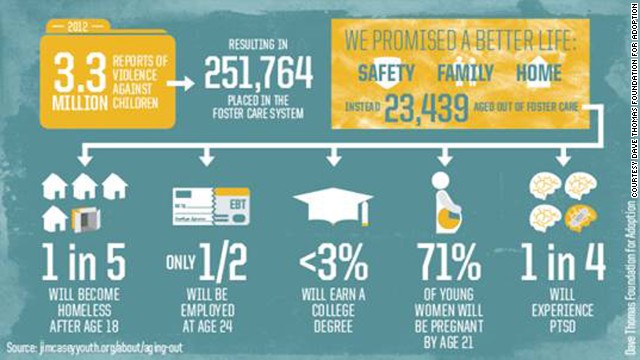
Out of all the troublesome issues France Winddance Twine raises in her book Outsourcing The Womb: Race, Class, and Gestational Surrogacy in a Global Market, the one that hurts me to the core is the fact that gestational surrogacy is replacing adoption as the go-to option for wealthy couples biologically unable to conceive children. According to AdoptUSkids there are currently 102,000 children in foster care waiting to be adopted, while 20,000 of them are aging out of the system every passing year. Over a hundred thousand children are living like nomads, moving from foster parent to foster parent, town to town, school to school every couple of months. Twenty thousand of them are 21 and considered adults, tossed out of the system without safety nets, never having known what it is like to have a permanent family who loves them and has the means to care for them.


It breaks my heart to realize that couples would rather rent the womb of an impoverished woman in India to incubate a semi-genetically related fetus than provide a home for a foster child who is already alive and in desperate need of their guidance. It says a lot about how people in our society envision the ideal family. What is it about the human condition in the United States that leads people to turn a blind eye to the growing number of children in foster homes even after realizing that having a child the natural way is impossible?

The same way race and class hierarchies underline the processes of gestational surrogacy, as Twine does an amazing job of explaining in her book, race and class hierarchies underline the decision making process of whether to foster, adopt or contract a surrogate. "In the United States assisted reproductive technologies are not accessible to the poor, working class, and many members of racial and ethnic minorities. Access to fertility treatments is available primarily to the wealthy, upper middle class, or those able and willing to borrow the money required. In other words, commercial surrogacy is limited to the economically privileged" (Twine pg. 8). The price for surrogacy is between $50,000- $100,000. In contrast, adopting a child from the foster care system costs between $0-$1000 according to adoptionhelp.org, which is far more doable for lower and middle class families. Furthermore, being a foster parent comes with monetary compensation, although it is never an exceptional sum. For this reason, most foster parents are usually people with modest economic backgrounds who often use fostering as a way to supplement their incomes.

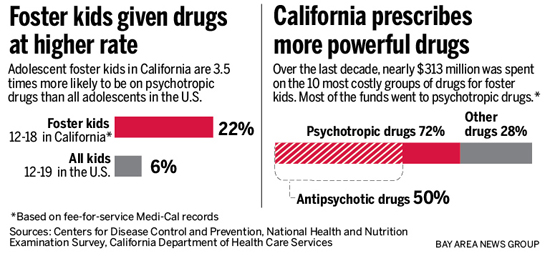
The desire to have genetically similar babies can not be separated from the desire to have white babies. There is clearly a monetary hierarchy in place in the business (gag) of having children. Twine's arguments goes even further with the addition of the race component when she states "the demand for white babies increased while the supply decreased"(pg. 4). According to the Child Welfare Information Gateway's Foster Care Statistics, more than half of the children entering foster care facilities are either African American, Hispanic/Latino, mixed race, or other. The way the demographics are distributed depend on what part of the country one is located. At the same time, most of these children were taken away from their parents due to neglect or unsafe conditions, so on top of the fact that they are minorities, there is a stigma surrounding the idea that these children are traumatized or disturbed and are likely to lash out against authority figures. This stigmatization is enforced through all facets of these children's lives as there are people benefitting from their demise. Pharmaceutical companies probably benefit the most, since Doctors tend to prescribe foster children with an alarming rate of psychiatric drugs.


The AdopUsKids website is quick to address these stereotypes by having videos of the children themselves talking about what it's like to be a foster child. I cried while watching the videos when it became apparent how aware these teenaged children are of how they are perceived by society. They are seen as "bad" children, when really the only thing that's bad is the world they did not choose to be born in. What's interesting about AdoptUSKids is how they have a catalogue of their children online, and you can search for a child by filtering results based on race, gender and age. I'll never understand the need to have a child of a specific race, but it could be linked to the desire of having a child that looks like the parent.

I'm not sure if it's socialization or human nature to want to leave behind a trace of your DNA after you're gone. It seems like a lot of the time, people are more concerned with that than leaving behind a good deed for mankind, or something that's truly meaningful. It hurts my heart to read about all these children growing up alone and without homes after seeing things no child should ever be around to see. It breaks my heart that wealthy couples, who have the resources to change these kids' lives are ignoring them, and instead feeding into the egoist capitalist beaurocratic franchise that is surrogacy.

Most people like to complain about their parents and are completely unaware of how blessed they are to have people who want them, love them and cherish them. I would not be the person I am today if it weren't for my mother's love and that makes me feel really deeply for children in the foster care system. I firmly believe that a parent's love is something everyone deserves to have. A lot of the issues Twine talks about in her book seem very far away from me. I don't know what I have in common with Indian women in caste systems. I can sympathize but I can't empathize. I do know that there are teenagers just like me without homes, whose futures are bleak because it is impossible to have a good education when you're switching schools every two months. I see myself in a lot of these children. I feel their pain. My heart goes out to them.

Wednesday, December 3, 2014

To sterilize....is to force?


With Susan Bordo’s “Are Mothers Persons?” we were discussing the key words and phrases, and talking about what each means: bodily integrity, informed consent, subjectivity, and lastly involuntary sterilization. Here are some of the brief definitions that I jot down for each of those terms.

Bodily integrity: intrinsic for bodies to have their own space—not meant to be violated—rights are protected
Informed consent: person is given all the options and consequences, and then making the person’s own choice and decision
Subjectivity: you and yourself are protected by the law, your self have rights; your self is an actual being
Involuntary sterilization: usually done to poor people who are usually on assistance from the state; therefore their bodily integrity is greatly diminished; they are seen as expendable by big hospitals, even doctors have performed involuntary sterilization as practice on those people

As we were going through each of these terms, when we came to the phrase “involuntary sterilization,” I was really unsure of what this term entailed, but I knew it was an act that violated the women’s bodily integrity. In addition, it was not done with informed consent; instead it was performed on the women without their knowledge. Plus, I was thinking of sterilization in terms of microbiology as in any process that eliminates (removes) or kills all forms of life, including transmissible agents such as virus, bacteria, etc. present on a surface, contained in a fluid, in medication, or in a compound such as biological culture media.

One of the tools needed for the sterilization process. 

However, as I was reading “Conquest: Sexual Violence and American Indian Genocide” by Andrea Smith, the term sterilization was brought up again. Before I read further, I looked up the definition of this term, and I found the act of sterilizing is defined as depriving someone of their ability to reproduce by blocking or removing their sex organs. I was shocked and ashamed of my ignorance because I did not bother to look up this term when I was unsure of its meaning.

Touching upon the chapter titled “Better Dead Than Pregnant,” I learned that involuntary sterilization was performed on Native American women in order to control the population of the Native American. Not only that, but this procedure was also performed on racial groups of color and the poor class who are often abusers of drugs and alcohol. As long as this practice is being performed on these oppressed groups, the concept of bodily integrity is disregarded as well as the ability to make one’s own choices and decisions. For example, in relating to the wealth status of women, historian Rickie Solinger states that the concept of “choice” is connected to possession of resources. As he states,

“Choice” also became a symbol of middle-class women’s arrival as independent consumers. Middle-class women could afford to choose. They had earned the right to choose motherhood, if they liked. According to many Americans, however, when choice was associated with poor women, it became a symbol of illegitimacy. Poor women had not earned the right to choose.

It is upsetting to read that individuals’ freedom of rights is based on the individual’s wealth status because of the resources that are being made available to those who can really afford it. That means those who are poor are not even given the choice to decide if they want to have children or not. That choice is taken away from them through involuntary sterilization because those in a higher position with the ability to choose to give the procedure (as in physicians and politicians) decide that the person should not have the chance to reproduce simply due to many reasons, necessary and also ridiculous.
Additionally, I found that along with Native American women with disabilities, involuntary sterilization was also done on women and girls with disabilities across the world. Some of the purposes for this violating procedure were population control, menstrual management and personal care, and pregnancy prevention (including pregnancy that results from sexual abuse).

Recently, the state of California just passed a bill that banned using sterilization as a form of birth control for the female inmates in all jails, prisons, and detention centers. Just last year, it was revealed that 148 women had undergone coerced sterilization which violated the prison rules between 2006 and 2010. An inmate, Crystal Nguyen who worked at a prison’s infirmary in 2007 recalled, “I was like, ‘Oh my God, that’s not right,’ Do they think they’re animals, and they don’t want them to breed anymore?” What she said demonstrated the viewpoint of the people who looks at women including those serving time, as “breeders” that should not even have the ability to reproduce. In the perspective of 34 years old Christina Cordero who went to prison for car theft, she remembers being pressured by the prison doctor: “As soon as he found out that I had five kids, he suggested that I look into getting it (tubal ligation—sterilization) done. The closer I got to my due date, the more he talked about it…He made me feel like a bad mother if I didn’t do it.” Since then, she has regretted making this decision that she made because she was emotionally manipulated and coerced.  
All of the examples that I mentioned about had in some form of the violation of one’s own rights, including the freedom of choice over one’s own body. In fact, the United Nations Special Rapporteur on violence against women has asserted that coerced sterilization is a method of medical control of a woman’s fertility. The entirety of this specific act violates a woman’s physical integrity and security and constitutes violence against women. This is something that everyone needs to know because even at this time, there are still people who do not realize the true severity of the lack of women’s reproductive rights and bodily integrity. We need to start advocating for women’s rights to have control over their own bodies, and make informed decisions in relating to their bodies because it is their bodies, not anyone’s.


Sterilization or Genocide?

http://ejht211012.blogspot.com/2012/03/forced-sterilization-of-native-american.html


Being assigned the reading “Better Dead than Pregnant: The Colonization of Native Women’s Reproductive Rights” written by Andrea Smith, informed me of the horrors of sterilization happening to Native women all over the world. The truth behind sterilization terrifies me now and I am in disbelief almost at how atrocious I found some of this article.
I chose two sections from the article because I thought they tied together nicely, and play off of each other. The two sections I chose are found on page 85 and 93. The first section outlines how sterilization abuse is still happening today, not only in Indian Health systems, however in societies around the world, for example the reading mentions Haiti using similar practices. Indian women said they were forced into sterilization and did not offer consent, neither written or oral. Smith writes, “ Sterilization abuse, while curbed, is certainly not dead, either in IHS or society at large. One woman I know went into IHS in the 1990’s for back surgery and came out with a hysterectomy… ‘They shut me up in a room and forced me to get undressed. Everything that happened was because they used force. I didn’t want to go through with it.’ Several women died during sterilization operations, which were carried out under non-hygienic conditions” (87). Immediately after reading this particular portion i felt sick. I guess that is why it stuck out to me at first, however once I analyzed for some time I felt more angry and disturbed with the reading. I do not know everything about IHS, however I do know that the indian population is not what it used to be because “we” came over and killed off many of them. The issue of sterilization to me seems like the opposite of what should be happening to indian population, because of the lack of population they have already. This absence of respect the doctors or those performing the sterilizations have for the Indian women is what kept sticking to my mind while reading, which leads to the other section of the article I chose to highlight.

Here is an cartoon image of a woman being dragged into a room unwillingly to be sterilized. (http://www.straightdope.com/columns/read/2384/were-40-of-native-american-women-forcibly-sterilized-in-the-1970s)


On page 93 Norplant was brought up, which is a contraceptive that is a small bar placed under the skin and can have some scary side effects. Starting in  the late 1980’s in Bangladesh women were using this contraceptive unknowing of the adverse side effects, Smith writes, “women receiving Norplant in Bangladesh without their informed consent were not able to have it removed when they developed side effects. Furthermore, when they reported side effects, doctors scolded them and refused to record the information. One woman attempting to get it removed told her doctor, ‘I’m dying, please help me get it out.’ Her doctor responded, ‘OK, when you die you inform us, we’ll get it out of your dead body’” (93). This paragraph illustrates perfectly the complete disrespect the doctors have for women and their bodies. These women who received the contraceptive went into it blind because they had no idea of the side effects which could occur from using it. If a doctor ever said something such as stated in the quote, I would sue, personally (if possible, I am in the dark about legal matters and if that could actually happen). Women have rights, and they also have choices. Both the sections from the article I chose displayed the rights being stripped from women both Indian and those in Bangladesh. I believe the doctors should have informed the women the contraceptive was going to be irreversible before they performed the surgery for it. Sterilization/contraceptive abuse is prevalent in society, and I can’t help but wonder, what if that was me?
Many, many women today use contraceptives, and are uninformed about the issues that come with them. If something is going to be done to fix this issue it needs to be carried out “up-steam”. Both the contraceptives with deadly side effects, and the sterilization of Indian women is a women’s right issue, and also an issue of race. While browsing online I found many images and articles relating sterilization to the creation of a superior race. This idea of a “superior race” is ridiculous and out-dated in my opinion, however clearly many (including the doctors performing surgeries) believe in a super race. It scares me that a part of society cares so much about not having colored people around that they are willing to perform deadly surgeries without consent, and in the case of contraceptives are willing to let women suffer for the sake of them not reproducing.
I came across an interesting article online about forced sterilization, and how women were having the surgery performed on them unknowingly, and how the nurses also did not know all the information pertaining to the forced sterilizations. The woman interviewed in the article, who was a nurse at the time many more un-consented sterilizations were happening (1930-1970’s),  confesses that she was only doing what she believed was the right thing to do because those above her in authority had told her to. I can reason with the woman in some respects because I as well am a pushover and do whatever I am told to whenever, however putting yourself in the shoes in those being sterilized would have been enough for me to stand up and say no. Recently holding my sisters newborn baby, and watching her interact with her child as a new mother I could never agree with the idea of ending the opportunity for a woman to have a family of her own. When women are stripped of the right to be a mother of their own child, that is a red light for society. We should not care about race, or how many kids one has had or wants to have, because the right to have children is the right of women, and women’s bodies. They are our own, and are not to be tampered with in such horrific ways.


Friday, November 21, 2014

Thoughts on Toxic Bodies

Growing up in a post-Silent Spring world on an organic farm staffed and patronized largely by devout environmentalists, I was taught a great deal about toxic chemicals (primarily lead and BPA-laden plastics) from a very young age. Sections of my family’s house still required cleanup as a result of lead paint and trimmings, certain water sources were known to utilize lead pipes, and my parents and friends were constantly on the search for alternatives to plastic for food and water storage, especially for the farm. To me, this was a part of everyday life, and as such I was surprised at how much focus was given to the issues of chemical and plastic leeching in high school science classes. Of course, I was unaware of the wider and more prevalent dangers of toxic chemical buildup outside of the agrarian settings which spurred much of my education on the subject.
Now, a few years later, I’ve come to notice a surprisingly similar trend between the (often) well-meaning but entirely wrong explanations constructed by families in nearby towns and the medical excuses made for a binary definition of gender as written on by Suzanne J. Kessle. There is a particular insistence upon one particular definition of “normal” that, once instilled in the mind of a group, persists forever and a day. In the case of doctors and intersex babies, it was an unshakeable belief in the binary nature of gender. In local families, it was a firm belief that pesticide and manure runoff was entirely unrelated to more than doubled rates of cancer and infant deformity in communities serviced by local water lines. While the two situations were entirely dissimilar, I was honestly incredibly surprised at the similarity in justifications used by the two entirely disparate groups.
On the subject of Toxic Bodies, my initial thought upon completing Chapter 1 was, sadly enough, that the evidence presented in the previous pages in regards to birth defects, especially any studies related to birth defects, might be used to justify the the status of intersex individuals as somehow “wrong”. While I have no doubt that chemicals have affected the fetal development of many thousands of people, justifying a diverse range of cases across hundreds of years of recorded history based on nonhuman studies is a stretch to say the least. More disturbingly, it seems to be the kind of “evidence” that would be rapidly and widely accepted given the overwhelming historical support for the gender binary.